A Devoted Wife’s Resolve
In the sacred city of Kāśī lived a noble merchant named Jaitpāl, a man of wealth, learning, and piety. His wife was equally virtuous—faithful, humble, and devoted to God and her husband. Together, they lived a life of dharma, serving saints and feeding pilgrims on the banks of the Gaṅgā.
One day, destiny struck. Jaitpāl fell ill and, despite all efforts, left his body in peace while remembering the name of Rāma. His wife, though torn by grief, resolved to follow her husband in death, for her love was not born of passion but of spiritual fidelity. She said, “Where my Lord has gone, I must follow. A wife without her husband is like a river cut from its source.”
The pyre was prepared on the riverbank, and the townspeople gathered to witness the act of satī (self-immolation). Dressed in a red sari, the wife walked toward the fire with calm dignity. Her heart beat only with the name of Rāma as she prayed, “O Lord, may this act unite me forever with my husband.”
A Saint’s Intervention
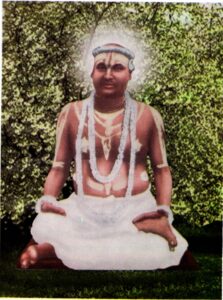
As she walked toward the pyre, she passed near the hermitage of Tulsīdās, who sat beneath a tree chanting the holy names of Lord Rāma. His face shone with serene compassion, and his voice carried the sweetness of divine love. Seeing the woman approach, he stopped his chanting and said gently, “Daughter, where are you going with such purpose in your eyes?”
She bowed respectfully and said, “O saint, my husband has gone to the next world. My duty as a wife is to follow him.”
Tulsīdās, moved by her devotion, smiled and said, “May you be blessed with a long life and eight noble sons.”
The woman was startled. “O holy one,” she said, “my husband’s body lies lifeless upon the pyre. How can I receive your blessing when death has already claimed him?”
The saint replied with unshakable calm: “O child, I spoke not from my mind but from the will of the Lord. His word never fails. Return to your husband, and see what the Lord of Ayodhyā has ordained.”
The Miracle of Rāma’s Grace
Obediently, the woman went back to the cremation ground. To her astonishment, she found the lifeless body of her husband stirring. Before the eyes of the astonished crowd, Jaitpāl sat up, his eyes shining with consciousness and peace.
A cry of wonder rose among the people: “Victory to Rāma! Victory to Tulsīdās, the saint who speaks the Lord’s will!”
The wife, overwhelmed, fell to the ground in gratitude. She took her husband by the hand, and together they went to Tulsīdās’s hermitage. Bowing before him, they said, “O saint, your word has conquered death itself. You are a true representative of the Lord.”
Tulsīdās replied humbly, “No, my children. It is not I who restored life, but He whose name I utter. The name of Rāma is life itself; it revives what is dead, purifies what is impure, and enlightens what is dark. Remember Him always, for He alone performs miracles.”
The King’s Wonder
News of this event spread throughout Kāśī, reaching Emperor Akbar in Delhi. When he heard that a mere brāhmaṇa’s word had raised the dead, he was struck with curiosity and awe. He said, “Bring this saint to me, that I may see the man whose speech has such divine power.”
He sent royal messengers to Tulsīdās with gifts and an invitation to his court. The humble saint, ever obedient to the will of God, accepted—not to meet a king, but to glorify his Lord. Thus began another chapter in the story of divine love between the emperor and the saint, destined to reveal once again the power of faith and the mercy of the Lord.
Reflections – The Power of Faith and the Word of a Saint
- The Word of a Pure Devotee Is God’s Word: When a saint speaks with perfect surrender, his words become one with divine will. Tulsīdās’s blessing carried the authority of Rāma Himself.
- God’s Mercy Flows Through His Servants: The Lord works through His devotees to awaken faith in others. By saving Jaitpāl, Rāma showed the world His compassion through Tulsīdās.
- Faith Transcends Death: The wife’s fidelity was not bound by fear or duty but by love that endures beyond death. Such love becomes the vessel for miracles.
- The Holy Name Is Life Itself: Tulsīdās did not claim power for himself. His humility teaches that all miracles belong to the holy name of Rāma, the breath of eternal life.
Through this event, Tulsīdās demonstrated the eternal truth that the Lord and His name are one—and that even death bows before the devotee who chants it with love.
Source: Bhaktavijaya, Chapter III, verses 245–256 (Mahīpati).