The Flower Garden of Yāvat
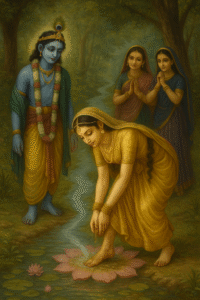
One radiant afternoon in Yāvat, the air was filled with the scent of blooming malati and jasmine. The sakhīs were busy weaving garlands for Śrīmatī Rādhārāṇī. As they worked, Lalitā teased, “Our Śyāmasundara is late again. Perhaps He is lost among the flowers of Candrāvalī’s garden?”
Rādhā looked up suddenly, Her eyes narrowing in mock displeasure. “He promised to come before noon. It seems His promises are as fickle as the bees that fly from one blossom to another.”
Viśākhā tried to soothe Her. “O Rādhe, perhaps He was delayed tending to the cows or stopped by some villagers.”
Rādhā replied sharply, “Yes — or by someone’s smile.”
The sakhīs exchanged knowing glances. They had seen this mood before — māna, the sweet jealousy born from love. It was not bitterness but the delicate play of divine affection, the ornament that makes love shine even brighter.
Kṛṣṇa’s Arrival
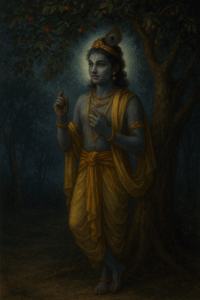
Meanwhile, Kṛṣṇa approached Yāvat, His heart beating with excitement. He carried in His hand a garland of fresh kadamba flowers and wore a mischievous smile. When He reached the grove, He saw Rādhārāṇī sitting silently, Her head turned away, and the sakhīs whispering around Her.
Kṛṣṇa bowed respectfully. “O Queen of My life, why do You turn away from Me? Has someone offended You?”
Rādhā did not answer. Her lips trembled, and She looked down, pretending not to notice Him.
Kṛṣṇa stepped closer and said softly, “If I have done something wrong, please forgive Me. My heart cannot bear Your silence.”
Rādhā said coldly, “If Your heart is so tender, perhaps You should offer it to Candrāvalī. Her sweetness seems to please You more than My simplicity.”
Kṛṣṇa looked surprised. “Candrāvalī? Ah, now I understand! The bees of gossip have reached even this sacred grove.”
Rādhā turned Her face away even more sharply. “Then go! Why come here to trouble Me with Your excuses?”
The Lord’s Humility
Kṛṣṇa, realizing Her heart was burning with loving pride, fell at Her feet. “O Rādhe, without You, even the fragrance of Vṛndāvana fades. The Yamunā dries up, and the flute refuses to sing. I may smile at others, but I live only in You. Please forgive Me.”
Still, Rādhā did not look at Him. She said, “Words are cheap. Love must be shown, not spoken.”
Kṛṣṇa folded His hands and spoke tenderly, “Then punish Me as You wish. Tie Me with the threads of Your māna. I will not move until You smile again.”
Hearing these words, Lalitā laughed softly and whispered to Rādhā, “If You stay angry any longer, the whole of Vraja will drown in His tears. See how He looks at You — as though the sun has set forever.”
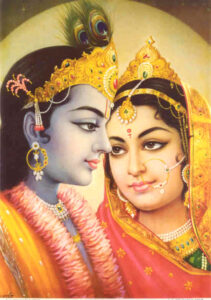
At last, Rādhā’s lips curved into a smile. “Very well,” She said playfully, “I forgive You — but only if You promise to never again speak to Candrāvalī.”
Kṛṣṇa replied with mock gravity, “If I must give up Candrāvalī to please You, then I will. But if You ever grow angry again, how will I survive?”
Rādhā smiled and placed a single flower from Her hair into His hand. “Then remember — this flower is My heart. Keep it always with You.”
The Celebration of Love
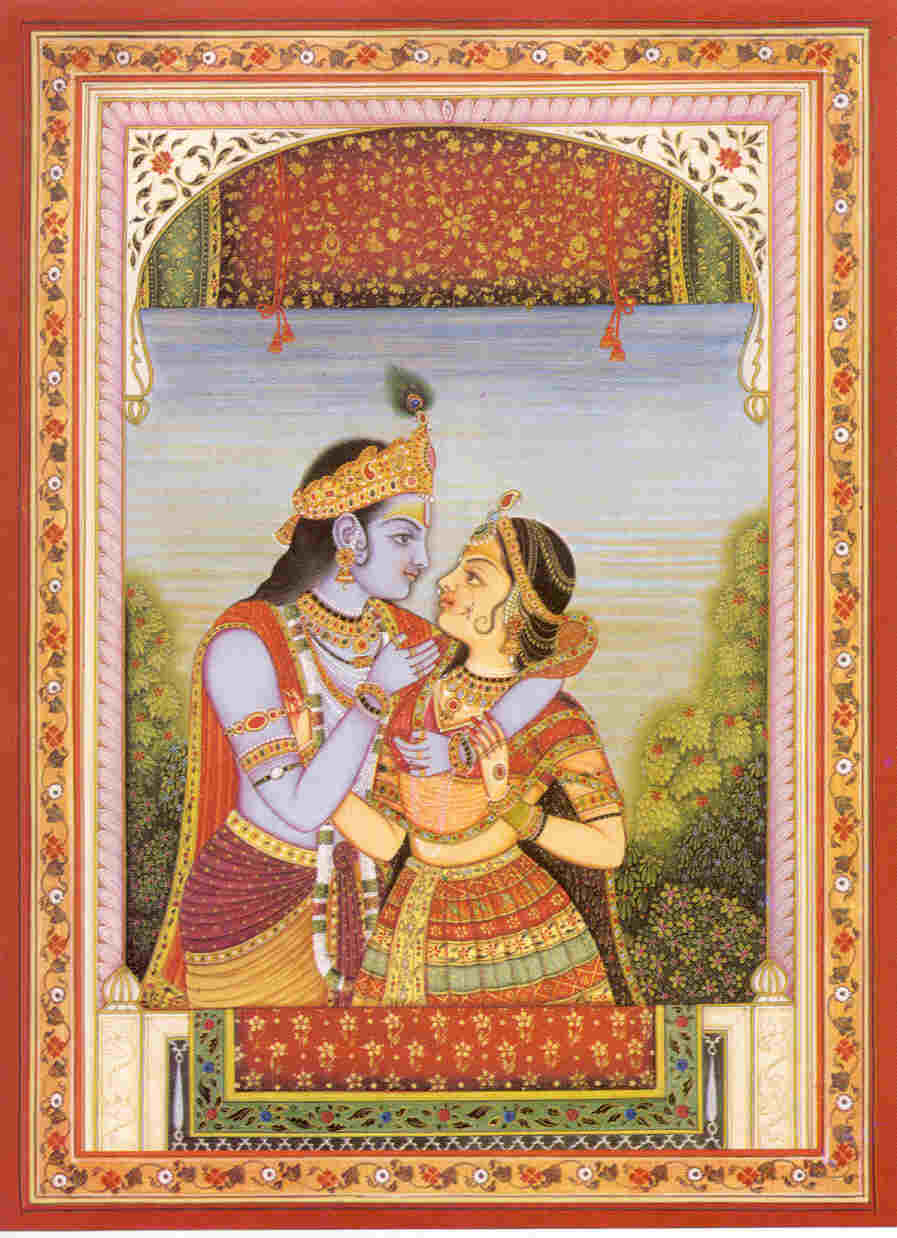
The sakhīs clapped joyfully as the Divine Couple embraced. The forest seemed to come alive — the bees buzzed louder, the peacocks danced, and even the breeze carried the sound of laughter.
In that moment, the māna that once separated Them became the bridge that united Them more deeply. For love without testing is like fragrance without wind — it needs movement to reveal its beauty.
The Hidden Meaning
The saints explain that māna, or loving jealousy, is a divine play in which the Lord and His devotee deepen their affection through separation and reconciliation.
Rādhārāṇī’s anger is not ego but the expression of the purest love, which seeks the Lord’s full attention. Kṛṣṇa’s humility is not weakness but the perfection of love that bows before devotion.
Thus, in Yāvat, even anger becomes worship, and tears become offerings of sweetness.
Lessons to Be Learned
- Divine love includes both union and separation. Even misunderstanding, when rooted in love, purifies the heart.
- True love humbles both the lover and the beloved. Kṛṣṇa Himself bows before Rādhā’s affection.
- Anger born of attachment to Kṛṣṇa is not a fault but a higher form of devotion.
- Reconciliation strengthens bonds. The beauty of love lies in forgiveness and renewed affection.
Reflections
In human relationships, jealousy and anger often arise from ego and insecurity. But in the spiritual world, māna is a reflection of divine intimacy — the longing to be loved exclusively by Kṛṣṇa.
When we become angry or hurt in service, we can remember this pastime: Rādhā’s anger purified Her love, and Kṛṣṇa’s humility glorified it. If we learn to forgive and humble ourselves, every conflict becomes a new door to love.
Let us pray for such divine māna — the kind that burns away pride and leaves only devotion.
Prayer
O Śrīmatī Rādhārāṇī, You are the very crest-jewel of loving pride, whose slightest glance makes the Lord of all worlds fall at Your feet.
O Śyāmasundara, who bows before love itself, please teach me that real strength lies in humility.
May I never mistake anger for hate nor pride for self-worth. Let every conflict in my life become an offering at Your lotus feet.
Just as You forgave Kṛṣṇa and turned māna into joy, let me forgive others and find peace in love.
May my heart always remember that You and Kṛṣṇa are never truly apart — nor is the soul from its Lord.
Origin of the Story
Adapted from “Vraja-līlā – Part 2” by Deena Bandhu dāsa (Yāvat Part One), inspired by the narrations in Śrīla Viśvanātha Cakravartī Ṭhākura’s Camatkāra-candrikā and Śrīla Jīva Gosvāmī’s Gopāla-campū, depicting Rādhā’s loving māna and Kṛṣṇa’s gentle humility.