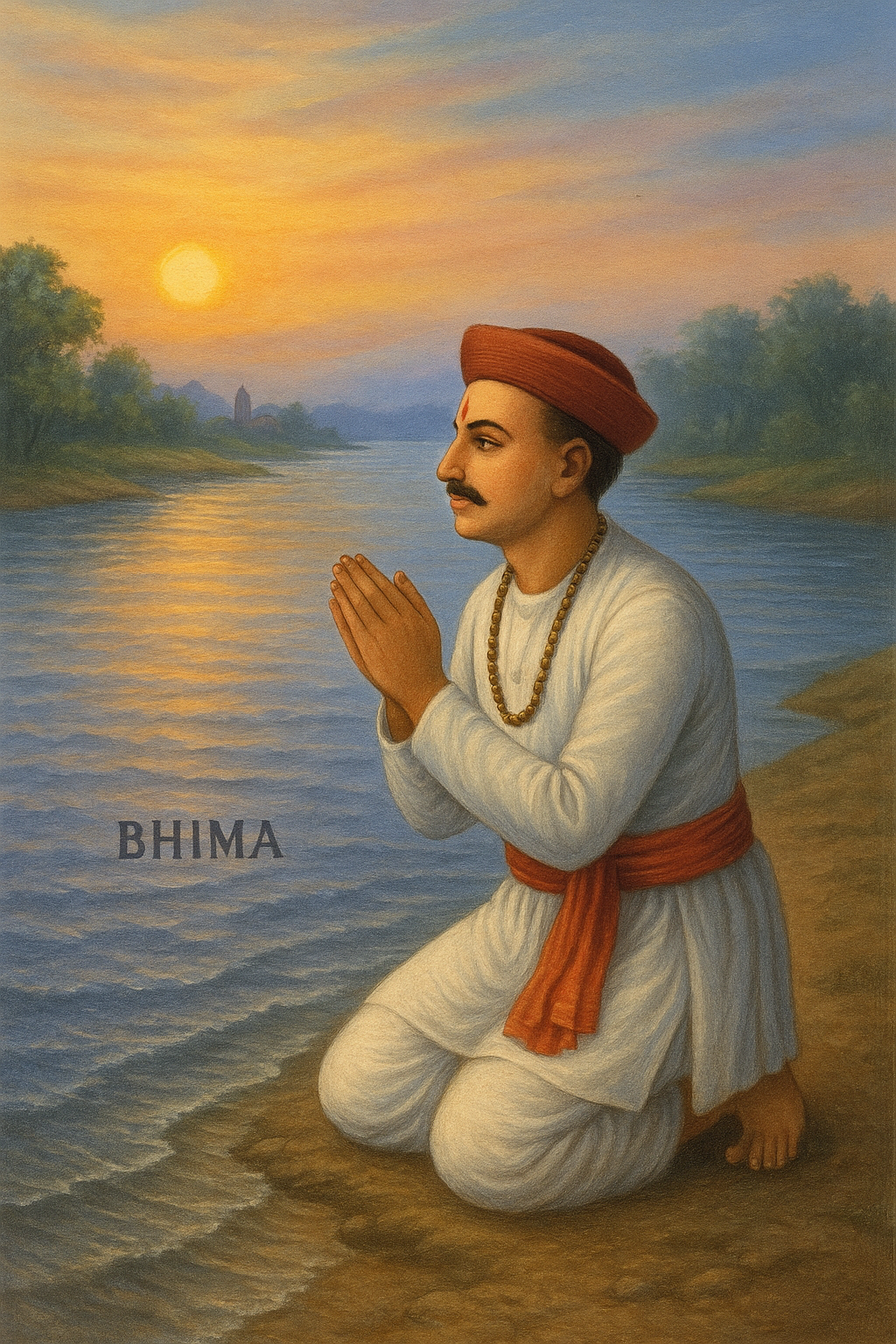
A Pilgrimage with the Saints
After the miracle of the moving wall, Saint Namdev became known throughout Maharashtra as one of the Lord’s dearest servants. Desiring to share divine love beyond caste and creed, he began a pilgrimage with Jñāneśvar, Nivṛtti, Sopan, and Muktabai.
As they journeyed from village to village, singing kīrtana and glorifying Lord Vitthal, many people joined them. But among those who came were also some humble devotees from low castes—potters, cobblers, and untouchables.
The Brahmins who followed in the procession were disturbed. Whispering among themselves, they said, “How can holy saints walk with such people? The scriptures forbid it!”
Jñāneśvar smiled and said gently, “Brothers, the Lord lives in every heart. Who can be pure or impure where God alone dwells?”
But the Brahmins refused to listen. They decided to exclude the so-called outcastes from the group.
Namdev’s Protest
When Namdev heard this, his heart filled with grief. He said, “You may separate yourselves from them, but I will not. They are Vitthal’s own. Where the humble are, there Vitthal dwells.”
He then walked over to the group of rejected devotees—one of them was the saintly cobbler Chokhamela, another was Savata Māli, a gardener, and the third was Nāmā’s dear friend Janabai.
“Come,” said Namdev, “let us sing our Lord’s name here, even if we are unfit for the world’s respect.”
They began to sing “Vitthal, Vitthal,” their voices rising like a river of love. The air became fragrant, the earth trembled, and in their midst appeared Lord Vitthal Himself, radiant and smiling.
The Lord’s Declaration
Vitthal said, “O fools who divide My children! You call them impure, but they are My heart. The sweat of their labor is My sandal paste; their tears are My holy water. They see Me where others see only dust.”
The Brahmins fell to the ground in shame. The Lord turned to Namdev, His eyes full of love. “Nama, you have understood Me. The world worships Me in temples; you find Me in the hearts of the humble.”
Namdev bowed and said, “O Lord, may I never forget that You walk disguised among the poor.”
The Fellowship of Bhakti
From that day, the saints of Paṇḍharpur never again allowed caste or pride to come between them. They declared that the true family of the Lord is made of love, not birth.
Namdev, Chokhamela, and Janabai sang together daily in Vitthal’s temple, showing that bhakti is the highest dharma for all.
Reflection – The Equality of All Souls
- God Dwells in All: Divinity is not confined by birth, purity, or learning. The heart’s sincerity alone makes one holy.
- The Humble as Teachers: The Lord is often closer to those whom society despises than to those who boast of piety.
- Unity in Bhakti: Love and remembrance of God dissolve all worldly distinctions.
- Namdev’s Vision: True devotion sees no “other,” for in every face the same Lord smiles.
Source: Mahīpati, Bhaktavijaya, Chapter XX, verses 1–68.


