The Meeting After Long Separation
After Kṛṣṇa left Vṛndāvana and settled in Dvārakā, many years passed. He fulfilled His duties as a king, protecting dharma, guiding the Yadus, and restoring righteousness across the world. Yet, deep within His heart, Vṛndāvana never faded. The songs of the cowherd boys, the fragrance of Yamunā’s banks, and above all, the sweet face of Śrīmatī Rādhārāṇī haunted His every breath.
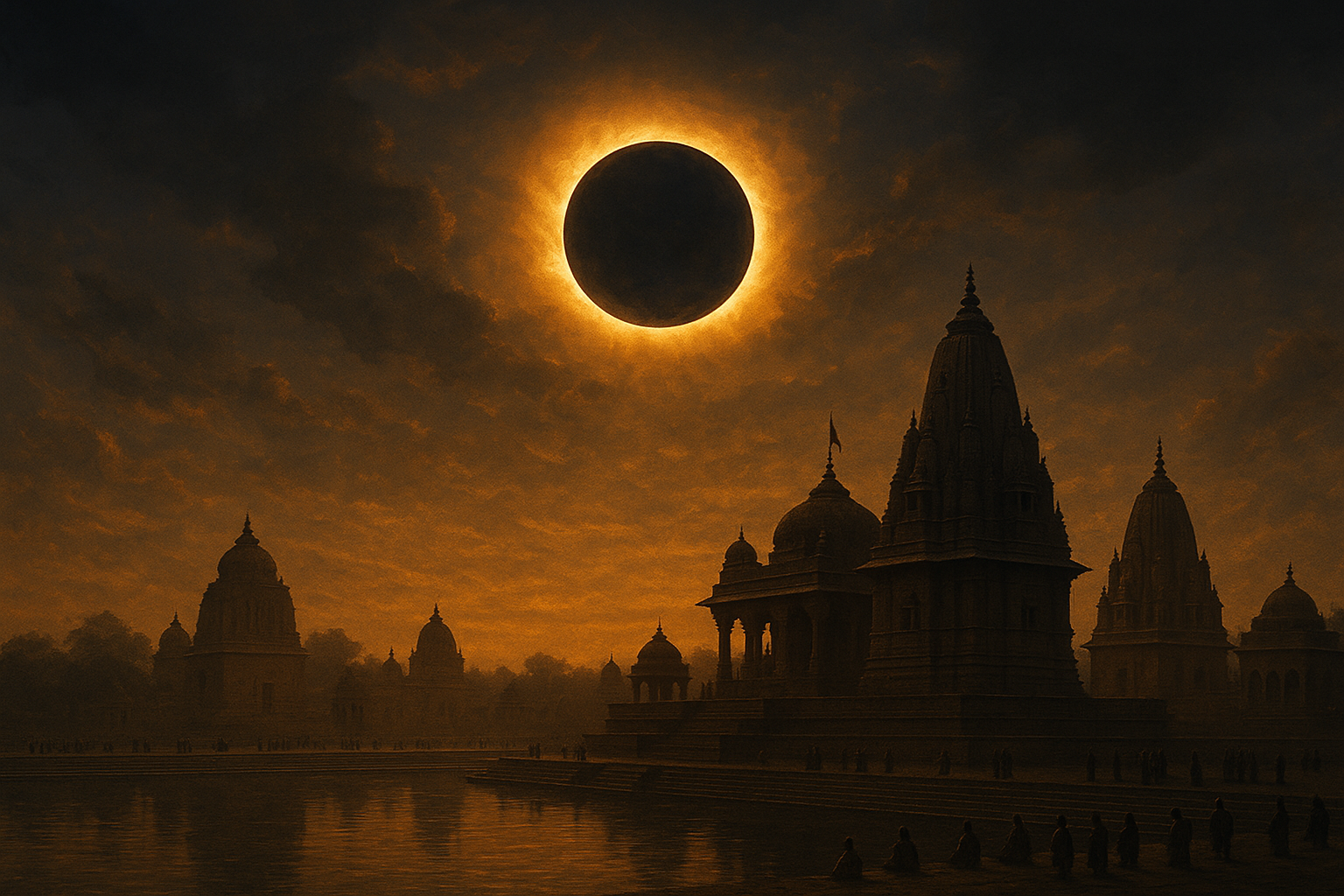
When the great solar eclipse occurred, Kṛṣṇa, accompanied by Balarāma and the Yadu dynasty, journeyed to Kurukṣetra to perform rituals of purification. At that time, the residents of Vraja—Nanda, Yaśodā, the gopas, and the gopīs—also came there, longing for His darśana.
For Rādhārāṇī and the gopīs, this journey was not of pilgrimage but of love. Their feet trembled, their eyes filled with tears, and their hearts beat with both joy and pain. They were about to see Kṛṣṇa again—but not their simple cowherd Kṛṣṇa. Now He was a royal prince, adorned with armor and surrounded by soldiers. Still, for them, He was the same boy who once played His flute beneath the kadamba trees of Vṛndāvana.
The First Glance
When the two parties met at Kurukṣetra, the universe held its breath. Kṛṣṇa saw Rādhā approaching, surrounded by Her sakhīs. Her eyes were filled with longing, Her steps unsteady, Her hands trembling like lotus petals in the wind. Seeing Her after so many years, Kṛṣṇa felt both joy and anguish.
He descended from His chariot, unable to contain His emotion. “Rādhe!” He cried. “How I have longed for this moment!”
Rādhārāṇī gazed upon Him silently. The jeweled ornaments and royal attire could not conceal the beloved cowherd boy She once knew. Yet, Her heart ached to see Him burdened with the weight of kingship.
“O Kṛṣṇa,” She said softly, “You have everything now—palaces, queens, glory, and fame. But have You forgotten the dust of Vṛndāvana? The sound of Your flute? The cows and the forests where You once played?”
Kṛṣṇa replied, “How could I forget, Rādhe? Every breath I take carries the scent of Vraja. But My duties bind Me here. Still, know this: wherever I am, My heart remains in Vṛndāvana—with You.”
The Chariot of Union
As the eclipse subsided, the gopīs surrounded Kṛṣṇa and urged Him to return with them. They said, “This place is crowded with kings and warriors. How can the melody of Your flute echo here? Come back with us to the groves of Vṛndāvana, where Your cows await, where Rādhā waits!”
Kṛṣṇa smiled sadly. “My beloved friends, I cannot return now. The path of destiny has separated Us for a while. But know this: though I am far in body, I am never away in heart. Vṛndāvana is the eternal home of My soul.”
Hearing this, Rādhārāṇī closed Her eyes and prayed silently, “O Lord, if You cannot return to Vṛndāvana, then bring Vṛndāvana into Your heart. Let this chariot, this battlefield, this world—be transformed by the music of Your love.”
In that moment, Kṛṣṇa, Rādhā, and the gopīs joined hands and danced together for the first time since leaving Vraja. Though the surroundings were harsh and filled with noise, in their hearts blossomed the same eternal Vṛndāvana. The chariot became a temple, the battlefield a forest of joy, and the sound of the conches turned into the soft notes of Kṛṣṇa’s flute.
The Deep Symbolism of Kurukṣetra
This meeting at Kurukṣetra represents the soul’s eternal struggle: the longing to reunite with the Divine amidst the duties and distractions of worldly life. Rādhārāṇī embodies the heart of pure devotion, which desires not Kṛṣṇa’s power or majesty but His simple presence as the beloved cowherd of Vṛndāvana.
The Ratha-yātrā festival of Lord Jagannātha (Kṛṣṇa) represents this very scene—the gopīs pulling Kṛṣṇa’s chariot from the grand royal city back to the simplicity of Vṛndāvana in their hearts. The festival is the cry of love calling God back home.
The Prayer of Separation
As Kṛṣṇa prepared to depart, Rādhā looked at Him one last time and said, “My Lord, You belong to all, yet I belong only to You. If You must stay here, let Me live in Your remembrance. Let the dust of Kurukṣetra remind You of the dust of Vraja. And when You see the moon, remember that it shines upon both of us.”
Kṛṣṇa, deeply moved, replied, “Rādhe, even if time itself ceases, My love for You shall not. You are the soul of My soul, the life of My life.”
They embraced for the last time, and tears from Their eyes fell upon the ground, forming a sacred pool said to still exist in Kurukṣetra today—known as Prema-sarovara, the lake of divine love.
Reflection
This divine meeting teaches the highest form of devotion—love in separation (vipralambha-bhāva). Śrīla Prabhupāda explained that the gopīs did not seek God’s greatness but His intimacy. Their devotion was so pure that even in separation, they felt union.
When we chant the holy names with longing, even amidst worldly noise and responsibility, we stand in the same spirit as Rādhā at Kurukṣetra—calling Kṛṣṇa back to the temple of the heart.
Let us pray:
“O Śrīmatī Rādhārāṇī, You showed how love remains unbroken even through separation. Teach me to remember Kṛṣṇa in every situation of life. Let my worldly duties become offerings, my words become prayers, and my heart become Vṛndāvana itself—where You and Kṛṣṇa dwell forever.”