The Devotee’s Background
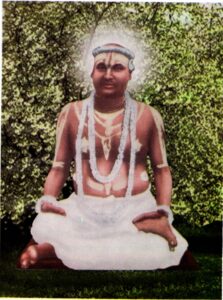
Śrī Viśvanātha Cakravartī Ṭhākura, one of the greatest ācāryas in the Gauḍīya Vaiṣṇava tradition, lived in Vṛndāvana in the late seventeenth century.
He was a scholar of unmatched brilliance and a rasika devotee whose heart was immersed in the intimate service of Śrī Śrī Rādhā-Kṛṣṇa.
He composed numerous devotional works, such as Rāga-vartma-candrikā, Mādhurya-kādambinī, Sārārtha-darśinī (a commentary on the Bhāgavatam), and sublime songs describing the divine pastimes of Rādhā and Kṛṣṇa. But beyond his learning, he was known for his deep humility and ecstatic absorption in the moods of the gopīs of Vṛndāvana.
The Divine Relationship
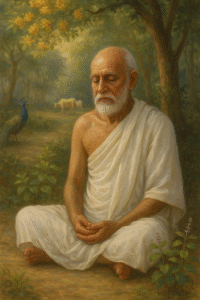
Śrī Viśvanātha lived near Rādhā-kuṇḍa, where he would perform bhajana in solitude, meditating constantly on the service of Śrīmatī Rādhārāṇī as Her maidservant, or mañjarī.
He saw every tree, creeper, and breeze of Vṛndāvana as alive with Her presence. His meditation was so deep that sometimes he would weep loudly or faint in ecstasy.
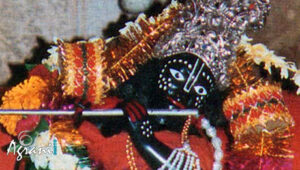
One night, while chanting near Rādhā-kuṇḍa, he entered a state of trance. In that vision, he saw himself within the spiritual realm of Vṛndāvana as a young mañjarī engaged in serving Śrīmatī Rādhikā. She called him with a gentle smile and said, “Bring Me the flute of Kṛṣṇa.” With trembling hands, he obeyed, offering it to Her with devotion.
When he awoke, tears streamed down his face, and his body shone with divine radiance. From that time onward, he could no longer think of himself as a scholar or ascetic—he saw himself only as a servant in the transcendental pastimes of the Divine Couple.
The Lord’s Reciprocation
One morning, as he sat absorbed in remembrance, a group of pilgrims came to Rādhā-kuṇḍa seeking his blessings. They bowed and offered him fruits and flowers.
But Viśvanātha paid no attention—his eyes were open, but his consciousness was elsewhere.
Suddenly, one of the pilgrims exclaimed, “Look! The fragrance of sandalwood and flowers is filling the air!”
The devotees looked around and saw that the garland on the Ṭhākura’s neck had changed—it now shone with a strange golden hue, unlike any earthly flower.
At that moment, Śrī Rādhārāṇī revealed Herself to Viśvanātha internally and said, “This garland has come from My own hands. It is the token of My acceptance of your eternal service.”
When he came out of his trance, he found that the garland was still around his neck. Seeing it, he wept uncontrollably, saying, “O Rādhike! My life has been fulfilled. You have accepted me as Your servant!”
The Legacy of Love
The incident spread throughout Vṛndāvana. Great scholars and saints came to honor him, but he remained as humble as ever. He would say, “I am not a ācārya or scholar—I am simply a maidservant of Rādhārāṇī, who allows me to serve Her by speaking about Her Lord.”
Through his writings, Viśvanātha Cakravartī Ṭhākura opened a window into the confidential moods of bhakti. His works are studied even today as jewels of Gauḍīya philosophy, filled with both profound wisdom and ecstatic devotion.
Reflection
The revelation given to Viśvanātha Cakravartī shows that the Lord reciprocates not only with outward service, but with the inner mood of the heart.
When the devotee’s identity becomes one with service itself, the Lord unveils the eternal relationship that has always existed.
True knowledge does not lead to pride—it leads to tears.
True scholarship does not accumulate information—it unveils the soul’s forgotten love.
And true bhakti is not an attainment but a remembrance of who we already are in the divine play of Rādhā and Kṛṣṇa.
Source
Source: “Experiences in Bhakti: The Science Celestial,” by O. B. L. Kapoor — Chapter Six: Verification of the Law of Reciprocation (place: Rādhā-kuṇḍa, Vṛndāvana).