The Sacred Sitting Place of Vallabhācārya
On the quiet northern bank of Pavana Sarovara lies a simple but deeply revered site — the baithak (sitting place) of Śrī Vallabhācārya, one of the greatest ācāryas of the Vaiṣṇava tradition and the founder of the Pushti-mārga. The spot appears modest, yet the atmosphere carries a distinct stillness and depth, as if the land itself remembers his presence.
For centuries, devotees have come here to honor the moment when Vallabhācārya sat by Pavana Sarovara, absorbed in meditation and devotion. This baithak stands not as a monument to ritual, but as a witness to genuine spiritual contemplation — a place where the heart naturally turns inward.
Vallabhācārya’s Visit to Nandagrāma
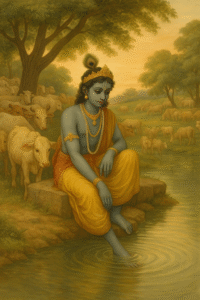
According to traditional accounts preserved in Vraja, Śrī Vallabhācārya visited Nandagrāma during his travels across the holy places. Drawn by the sacred atmosphere of Pavana Sarovara, he chose this quiet spot on the lake’s northern side to sit, chant, and meditate.
Here, he contemplated the childhood lilās of Kṛṣṇa, the affection of Nanda Mahārāja and Mother Yaśodā, and the intimate pastimes that unfolded across Nandīśvara Hill. Devotees believe he experienced profound spiritual realizations while reflecting on the sweetness of Kṛṣṇa’s life in Vraja.
This baithak became especially significant for the Vallabha-sampradāya, whose followers maintain it even today with great care and devotion.
A Place of Silent Remembrance
The baithak itself is simple — just a humble area marked to indicate where the ācārya sat. Yet its simplicity is precisely what gives it beauty. There is no grandeur here, only quiet reverence. Sitting near this spot, one easily feels encouraged to quiet the mind and turn inward.
Many visitors who come to Pavana Sarovara pause here instinctively. Something about the atmosphere invites reflection. The lake before you is peaceful, the trees give shade, and the surroundings feel untouched by time. This makes the baithak a natural place to chant softly, breathe slowly, and sit with one’s thoughts.
Remembering Kṛṣṇa Through the Eyes of an Ācārya
To sit where a great devotee once contemplated Kṛṣṇa is a gift. Vallabhācārya’s devotion was centered on the sweetness of the Lord — His childhood form, His playfulness, His love for the Vrajavāsīs. Remembering Kṛṣṇa through the heart of such a devotee helps us deepen our own appreciation.
The baithak also reminds us that spiritual insight develops through sincere practice. Vallabhācārya did not seek crowds or fame; he simply sat at the edge of this beautiful lake and absorbed himself in thoughts of Kṛṣṇa. His example encourages us to cultivate moments of quiet devotion in our own lives.
REFLECTION
This sacred sitting place teaches an important lesson: deep spiritual understanding grows in environments where the mind becomes peaceful. Vallabhācārya did not require elaborate arrangements to experience spiritual clarity — he simply sat near the lake, reflected on Kṛṣṇa, and allowed remembrance to fill his heart. This shows that the essence of devotional life is sincerity, not complexity.
Being near this baithak also reminds us of the value of learning from great devotees. By reflecting on how they absorbed themselves in Kṛṣṇa’s pastimes, we naturally become inspired to deepen our own meditation. Their dedication becomes a guiding light for our journey.
The peaceful atmosphere of the baithak encourages us to seek similar moments of quiet in our daily lives. Even a few minutes of undistracted remembrance can transform the heart. Just as Vallabhācārya found spiritual nourishment on the banks of Pavana Sarovara, we too can cultivate spaces where devotion flows naturally.
Through this simple shrine, we are reminded that true growth in spiritual life happens gently — through reflection, humility, and consistent remembrance of the Lord.
PRAYER
O sacred baithak of Śrī Vallabhācārya,
please inspire in me the same humility and steadiness that brought the ācārya to this peaceful shore.
Help me cultivate a sincere desire to remember Kṛṣṇa, even in small moments of stillness.
May my heart become calm, focused, and receptive to spiritual insight.
Allow me to follow the path of devotion with simplicity, sincerity, and love.
ORIGIN OF ALL FACTS
All facts come directly from:
Nandagram – The Capital of Nanda Maharaja (2003) — Prabuddha Dāsa
with references to:
- Traditional Vrajavāsī accounts of Vallabhācārya’s visit
- The preserved baithak maintained by the Vallabha-sampradāya
- The historical practice of commemorating the ācārya’s meditation sites in Vraja
Only the English and devotional narration have been improved.
All facts remain exactly as given in the source.