A Hidden Gem of Vraja
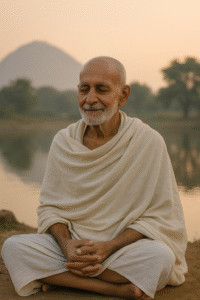
Śrī Nityānanda Dāsa Bābājī was one of the quiet, radiant saints of Vṛndāvana whose life shone not through miracles or public fame, but through the silent fragrance of his devotion. A disciple in the line of Śrī Kṛṣṇa Dāsa Bābājī of Govardhana, he lived a life of simplicity, austerity, and constant remembrance of Rādhā and Kṛṣṇa. Among the saints of Vraja, he was known as a mahā-bhāgavata who saw every living being as a spark of the Lord’s energy.
His Birth and Early Inclination
Born in Bengal in a humble brāhmaṇa family, Nityānanda Dāsa was inclined toward spiritual life from his earliest years. He was quiet, compassionate, and detached from worldly pleasures. Even as a boy, he would spend hours meditating near rivers or under trees, softly chanting the holy names.
His parents hoped he would marry and continue the family line, but Nityānanda’s heart was already captured by the divine. One night, after hearing a traveling kīrtan party singing about Lord Caitanya and the gopīs of Vṛndāvana, he felt an irresistible pull toward that eternal land of love. Without telling anyone, he left home and journeyed on foot toward Vṛndāvana, sustained only by his chanting and faith.
His Arrival in Vṛndāvana
After months of walking, he reached the sacred land of Vraja. When his eyes first fell upon Govardhana Hill, he felt as if his very soul had found its true home. Falling to the ground, he cried out, “O Girirāja! You are Kṛṣṇa Himself! Please allow this fallen one to take shelter at your feet.”
He then took shelter at the feet of Śrī Kṛṣṇa Dāsa Bābājī of Govardhana, who was renowned as a siddha saint. Seeing the sincerity of the young renunciant, the Bābājī initiated him into the chanting of the holy name and instructed him in the path of rāgānugā-bhakti — loving devotion in the mood of spontaneous attachment to the divine couple.
A Life of Solitary Devotion
Śrī Nityānanda Dāsa Bābājī settled near Govardhana and spent many years absorbed in bhajana. His dwelling was a small thatched hut made of clay and bamboo, shaded by a kadamba tree. He owned no possessions except his tulasī beads, a clay water pot, and a wooden staff.
He chanted the holy name incessantly and spent his nights meditating on the divine pastimes of Rādhā and Kṛṣṇa. His eyes were often filled with tears, and his lips trembled while chanting. Sometimes he would laugh, sometimes cry, and sometimes fall unconscious in divine ecstasy.
When villagers brought him food, he would first offer it mentally to Rādhā-Kṛṣṇa and then distribute most of it to cows or birds. He often said, “Whatever comes to me belongs to Them, not to me.”
The Miracle of the Cowherd Boy
Once, during the heat of summer, Nityānanda Dāsa Bābājī was meditating in the forest near Govardhana. He had not eaten or drunk water for several days. As he sat absorbed in remembrance of Kṛṣṇa, a cowherd boy appeared before him with a pot of cool milk. The boy said sweetly, “Bābājī, please take this milk. My mother has sent it for you.”
Nityānanda Dāsa looked up and smiled faintly. “My son,” he said, “who is your mother?” The boy replied, “My mother lives nearby. She knows you do not eat and worries that you will fall ill.”
The Bābājī accepted the milk and drank it. It was sweeter than anything he had ever tasted. When he looked up to thank the boy, there was no one there. He searched the forest, but the boy had vanished. In his heart, he understood — it was none other than Kṛṣṇa Himself, the eternal cowherd of Vraja, who had come to serve His devotee.
From that day on, whenever anyone offered food or water to Nityānanda Dāsa, he would smile and say, “How can I take from others when the Lord Himself has fed me?”
His Compassion for the Poor and Fallen
Though Nityānanda Dāsa lived in seclusion, he was known for his deep compassion. Every day, he would walk barefoot around Govardhana Hill and distribute prasāda to the poor, the sick, and the wandering ascetics. When questioned why he cared so much for the needy, he would reply, “How can one serve Rādhā and Kṛṣṇa while ignoring Their children? The dust of Vraja itself cries for compassion.”
Once, when a leper approached him seeking alms, Nityānanda Dāsa embraced him without hesitation. The devotees nearby were startled, but the Bābājī said, “He is not a leper — he is Kṛṣṇa in disguise, come to test whether I have learned to love beyond appearances.” The leper was instantly healed.
His Humility and Detachment
Nityānanda Dāsa Bābājī was utterly free from pride. He never considered himself a guru or a saint. When people came to take his blessings, he would bow down before them and say, “You are Vaiṣṇavas — servants of the Lord. How can this sinner bless you?”
He refused to collect disciples or wealth. Once, a wealthy merchant offered him a large sum of money to build a temple in his name. The Bābājī laughed and said, “I already have a temple — it is this heart, where Rādhā and Kṛṣṇa play day and night. What other temple do I need?”
The Night of His Departure
When the time came for him to leave the world, Nityānanda Dāsa Bābājī called a few close devotees and said softly, “Do not lament when this body falls. It was only a garment worn for the Lord’s service. The Lord Himself is calling me home.”
He asked them to place him facing Govardhana Hill. Taking his tulasī beads in his hand, he began chanting the holy names:
Hare Kṛṣṇa Hare Kṛṣṇa, Kṛṣṇa Kṛṣṇa Hare Hare,
Hare Rāma Hare Rāma, Rāma Rāma Hare Hare.
Gradually, his chanting slowed, and his face became radiant with bliss. With a final whisper of “Rādhe Śyāma,” he entered into eternal samādhi.
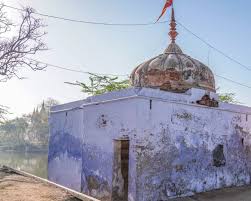
The devotees performed his samādhi on the northern side of Govardhana Hill, under a peepal tree. Even today, pilgrims who bow at his resting place feel a cool, peace-filled presence and the fragrance of devotion in the air.
Reflection
Śrī Nityānanda Dāsa Bābājī’s life teaches that the highest spiritual realization lies in simplicity, humility, and compassion. True greatness is not proclaimed; it is lived quietly, like the scent of a flower carried by the wind. His heart was a temple of love — silent, empty of pride, and filled only with remembrance of Rādhā and Kṛṣṇa.
He showed that the Lord Himself becomes the servant of one who serves with pure love. For such a devotee, the boundary between God and servant disappears, leaving only the dance of divine affection.
Prayer
O Śrī Nityānanda Dāsa Bābājī, hidden saint of Govardhana,
Your life was a garland of humility and love,
You saw Kṛṣṇa in every creature and mercy in every breath.
Teach us to live simply, to see divinity in all beings,
To chant with sincerity and to serve without desire.
May your spirit of compassion awaken within our hearts,
And may we, like you, one day taste the sweetness of Rādhā and Kṛṣṇa’s mercy.
Source: The Saints of Vraja