The Embodiment of Pure Bhajana
Among the saints of Vṛndāvana and Navadvīpa, few shone with such radiant purity as Śrī Gaura Kiśora Dāsa Bābājī Mahārāja. His life was the very essence of renunciation, humility, and loving dependence on the holy name.
He possessed nothing of the world, desired nothing from the world, and spoke only of Kṛṣṇa. To him, the holy name was not a sound to be chanted — it was the eternal reality to be lived in every breath.
Early Life and Renunciation
Śrī Gaura Kiśora Dāsa Bābājī was born in Faridpur, East Bengal, in a simple Vaiṣṇava family. His early name was Vamsī Dāsa. From youth, he showed signs of devotion — chanting constantly, serving saints, and weeping at the sound of kīrtana.
He married in early life, but after his wife’s passing, he renounced all worldly attachments and came to Vṛndāvana to dedicate himself completely to bhajana.
There, he met several exalted sādhus and took initiation in the Gauḍīya line. For many years he wandered from one holy place to another — Govardhana, Rādhā-kuṇḍa, and Yamunā’s banks — always absorbed in chanting the holy name.
Life of Complete Detachment
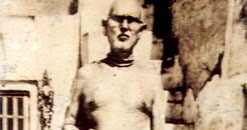
Śrī Gaura Kiśora Dāsa Bābājī lived as a true avadhūta — one beyond material customs. His possessions consisted of a single kaupīna (loincloth), a broken water pot, and a few beads for chanting. He often lived in empty grain baskets, dilapidated huts, or under boats along the Gaṅgā.
He never accepted disciples, wealth, or recognition. When someone tried to honor him, he would flee the place immediately, saying, “The smell of fame is more poisonous than worldly life.”
When a wealthy devotee once offered him a new pair of kaupīnas, he replied, “I already have two — one to wear and one to dry. What will I do with your wealth?”
His Absorption in the Holy Name
The holy name was his food, rest, and breath. He would chant from early dawn until late night, sometimes dancing, sometimes weeping, sometimes rolling in the dust of Navadvīpa.
People often found him speaking to the Lord as if conversing face to face. Once he was heard saying, “O Kṛṣṇa, I have served You for so long, yet You still test me with hunger! But I will not give up Your name even if You give me nothing but dust.”
He was so absorbed in nāma-bhajana that he often forgot to eat or sleep. His body became frail, but his face shone with divine joy.
Encounter with Bhaktisiddhānta Sarasvatī Ṭhākura
When Śrīla Bhaktisiddhānta Sarasvatī Ṭhākura (then known as Bimala Prasāda Datta) came to him for initiation, Gaura Kiśora Dāsa Bābājī refused repeatedly, saying, “I am a fallen soul unfit to be guru.”
But Bimala Prasāda persisted with deep humility, serving him daily. Finally, one day, moved by the sincerity of his devotion, Gaura Kiśora Dāsa Bābājī poured the dust of his feet into Bimala Prasāda’s hand and said, “Take this dust. It will teach you what no book can.”
Later, he formally gave him mantra-dīkṣā, and thus the spiritual lineage that would become the Gauḍīya Maṭha and ISKCON received its life-giving current of bhakti.
His Instructions on Bhajana
Śrī Gaura Kiśora Dāsa Bābājī taught that the path of devotion is internal — not in external show, but in heartfelt surrender. He often said:
“Do not try to see Kṛṣṇa. Act so that Kṛṣṇa will want to see you.”
He warned against pride, imitation, and intellectual arrogance. “If one chants with pride, the name hides. If one chants with humility, the name dances.”
He lived these words perfectly. Though people saw him as a beggar, he was the emperor of devotion.
His Final Days and Departure
In his final years, Gaura Kiśora Dāsa Bābājī lived near the banks of the Gaṅgā in Navadvīpa. His body was bent with age, but his voice remained filled with the sweetness of the holy name.
One day, he told a devotee, “Kṛṣṇa has come to take me.” He continued chanting softly, his eyes filled with tears. At sunset, as the kīrtana of “Hare Kṛṣṇa” filled the air, his chanting faded into silence — he had entered the eternal kīrtana of Goloka.
When news spread, hundreds gathered to pay homage. But he had once instructed, “Do not touch this body after death — it is only dust.” So his disciples humbly placed him in samādhi on the banks of the Gaṅgā in Kuliyā, where his presence is still felt today.
Reflection
Śrī Gaura Kiśora Dāsa Bābājī’s life is the highest example of naiṣkarmya — complete freedom from worldly desires. He did not speak philosophy; he lived it.
His poverty was his wealth, his tears his jewels, and his remembrance of Kṛṣṇa his kingdom. He taught that bhakti is not achieved through learning or ritual but by emptying the heart of ego and letting the name of God fill it completely.
He is a lamp for all who seek the path of simple, sincere, and heart-centered devotion.
Prayer
O Gaura Kiśora Dāsa Bābājī Mahārāja,
Ocean of humility and lover of the holy name,
Your torn cloth was your throne, your tears your jewels.
Teach us the beauty of simplicity,
The power of the holy name,
And the sweetness of surrender.
Let your dust purify our pride,
Let your example awaken in us love without desire,
And let us one day chant as you chanted —
Seeing only Kṛṣṇa, hearing only His name.