A Temple Beside the Sacred Lake
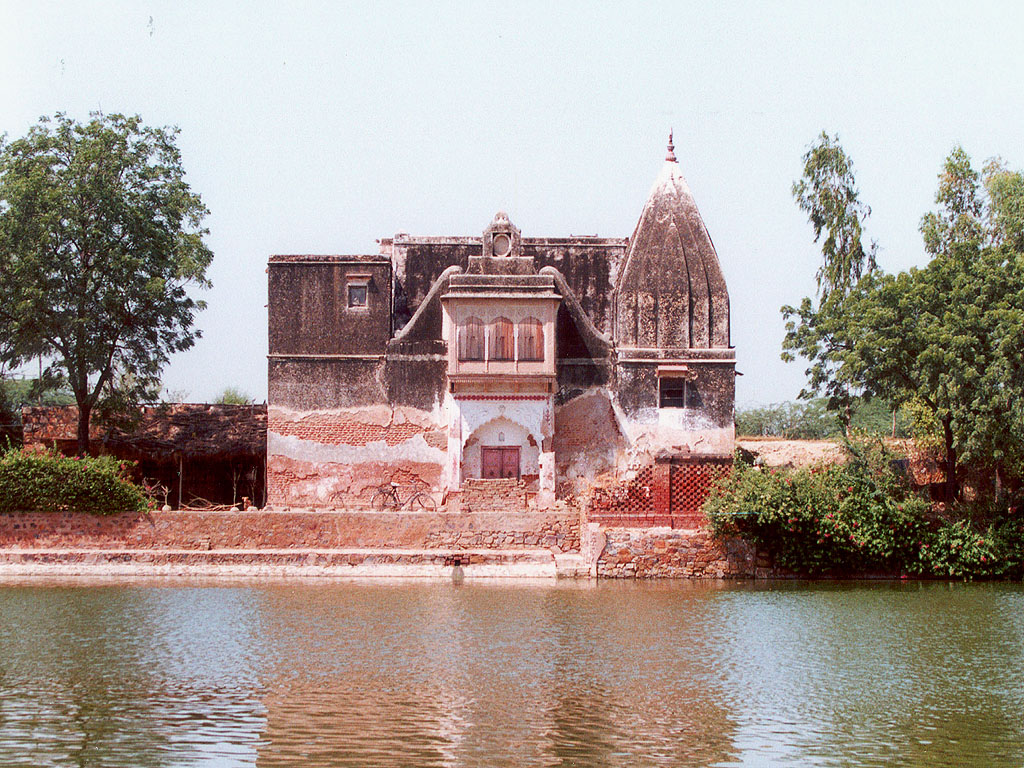
Standing on the tranquil bank of Pavana Sarovara is the beautiful Pavana-Bihārī Temple, a quiet and sacred place that holds the presence of Śrī Kṛṣṇa and His intimate Vraja pastimes. The gentle rustling of leaves, the shimmering water, and the soft atmosphere all work together to remind visitors of the divine activities that once took place here.
For many pilgrims, this temple is the natural next stop after visiting the lake. Its simple beauty reflects the humility and sweetness of Vraja. Devotees often sit here to chant and reflect, knowing that these very grounds once echoed with Kṛṣṇa’s own footsteps and laughter.
A Place Remembered for Kṛṣṇa’s Evening Lilās
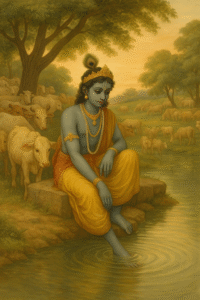
The name “Pavana-Bihārī” refers to Kṛṣṇa as the Enjoyer of Pavana Sarovara. These are the lilās He performed in the cool evenings after tending the cows. At dusk, Kṛṣṇa would come to this area — sometimes with friends, sometimes in hopeful anticipation of a secret meeting with Śrīmatī Rādhārāṇī.
The temple stands as a gentle reminder of those moments. Many devotees believe that Kṛṣṇa’s presence is still felt most strongly here during sunrise and sunset, when the light becomes soft and the world seems to pause.
The Story of Nanda Mahārāja and Prayāga-rāja
It was near this very spot that the extraordinary pastime involving Prayāga-rāja took place.
One day, Nanda Mahārāja expressed his desire to go on pilgrimage to Prayāga. When Kṛṣṇa heard this, He gently suggested:
“Bābā, go on Akṣaya-tṛtīyā.”
On that morning, Nanda Mahārāja came to Pavana Sarovara to bathe. There, he saw a radiant personality immersed in joyful spiritual ecstasy. Astonished, he asked:
“Who are you?”
The luminous figure replied:
“I am Prayāga-rāja.”
He explained that he came to Pavana Sarovara once a year to purify himself. Because millions of people bathe in his waters annually, he absorbs their sins. Therefore, on this one sacred day, he visits this lake — and on that day, all holy rivers such as Gaṅgā, Yamunā, Sarasvatī, and Kaverī also appear here in beautiful feminine form to bathe.
Nanda Mahārāja returned home overwhelmed with wonder.
“Today,” he told Kṛṣṇa, “I will not go anywhere. All holy places came here.”
From this event, the lake came to be known as Pāvana — “the purifier.”
A Quiet Place for Remembrance and Chanting
Today, devotees often sit near the Pavana-Bihārī Temple to chant. The atmosphere naturally draws the mind inward. The reflections of the temple in the water, the gentle wind from the lake, and the peaceful surroundings help the heart settle into remembrance of Kṛṣṇa.
This place teaches the importance of finding or creating peaceful spaces where the mind can become steady. Even a small corner of one’s home can become a personal “Pavana-Bihārī Temple” if it is used regularly for chanting and spiritual reflection.
REFLECTION
The Pavana-Bihārī Temple offers a valuable reminder about the nature of spiritual life. Hearing how Kṛṣṇa spent His evenings near this lake — resting, playing, meeting His loved ones — helps us understand that devotion is meant to be personal and filled with relationship. Kṛṣṇa is not a distant force but a loving Personality who reciprocates with the sincerity of His devotees.
Nanda Mahārāja’s interaction with Prayāga-rāja highlights another important truth: real purification happens when we remember Kṛṣṇa. External pilgrimage has value, but the inner pilgrimage — the movement of our consciousness toward the Lord — is essential. When our daily routine includes sincere remembrance, our home, workplace, and environment gradually become spiritually uplifting.
The quiet atmosphere around this temple also teaches us the importance of cultivating peaceful spaces in our life. When the mind becomes calm, remembrance of Kṛṣṇa deepens naturally. A devotee does not need elaborate arrangements; sincerity itself creates sacredness.
By reflecting on these pastimes and environments, our desire to chant, serve, and develop a close relationship with Kṛṣṇa grows stronger. This is the real effect of visiting or hearing about holy places — they inspire a change of heart.
PRAYER
Dear Pavana-Bihārī Temple,
please help me develop a genuine desire to remember Kṛṣṇa.
Let my heart become peaceful and receptive,
a place where devotion can grow naturally.
May the memory of Kṛṣṇa’s evening lilās near Pavana Sarovara
awaken sincerity, steadiness, and affection within me.
Please guide me toward a life centered on serving the Lord with love.
ORIGIN OF ALL FACTS
All facts come directly from:
Nandagram – The Capital of Nanda Maharaja (2003) — Prabuddha Dāsa
with citations from:
- Bhakti-ratnākara
- Śrī Kṛṣṇa-bhāvanāmṛta
- Govinda-līlāmṛta
- Saṅkalpa-kalpadruma
- Vraja-vilāsa-stava
- Uddhava-sandeśa
- Śrī Śrī Rādhā-Kṛṣṇa-gaṇoddeśa-dīpikā
- Caitanya-caritāmṛta, Madhya 18.58