The Cooling Pond Where Kṛṣṇa Rested After Cowherding
A Quiet Pond Beneath Nandīśvara Hill
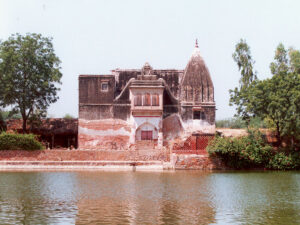
On the southern side of Nandagrāma, nestled quietly beneath the shade of trees, lies Madhusūdana-kuṇḍa — a serene pond connected to Kṛṣṇa’s daily cowherding pastimes. Unlike the more well-known lakes of Vraja, Madhusūdana-kuṇḍa feels humble, peaceful, and tucked away, as if it prefers to remain unnoticed. Yet for the Vrajavāsīs, it holds deep significance.
This is the place where Kṛṣṇa would often come to cool Himself after spending long hours tending the cows on the surrounding pastures. The water was refreshing, the breeze gentle, and the atmosphere perfect for quiet rest.
Kṛṣṇa’s Return From the Forest
Every day, after leading the cows through the forests and grassy hills of Vraja, Kṛṣṇa would return to Nandīśvara Hill glowing with dust, cow fragrance, and youthful energy. Before entering Nanda Bhavana, He would first come to Madhusūdana-kuṇḍa.
Here, He washed His lotus feet, rinsed His hands and face, and refreshed Himself before meeting Mother Yaśodā. The boys who accompanied Him — Śrīdāma, Subala, Madhumaṅgala — splashed water, teased each other, and joked loudly, filling the place with laughter.
For the residents of Nandagrāma, seeing Kṛṣṇa near this pond meant one thing:
their beloved child was home safely.
A Resting Place After Cowherding
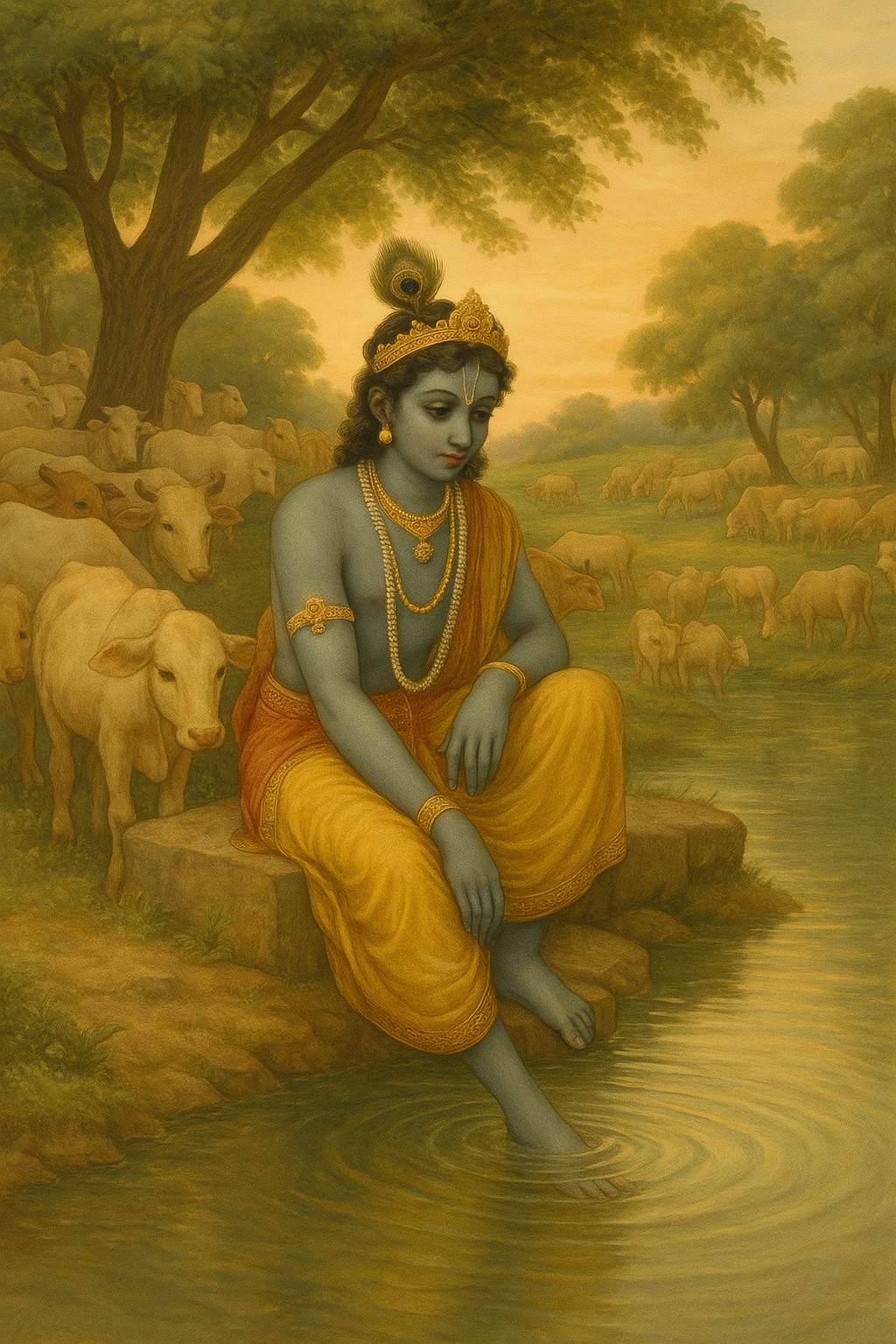
Devotees say that during the hotter months, Kṛṣṇa would even sit by the edge of this pond for a few moments, cooling His feet in the water while His cows gathered around Him.
Imagine the scene:
- Kṛṣṇa sitting on a flat stone
- His feet dipped gently in the cool water
- Cows gathering in a protective circle
- His cowherd friends lying on the grass nearby
- The dusk light reflecting softly on the pond
It is said the entire scene glowed with affection.
Why the Name “Madhusūdana-kuṇḍa”?
The name “Madhusūdana” means “the slayer of the demon Madhu.” Although this pastime did not occur here, the name celebrates Kṛṣṇa’s strength and His role as the protector of Vraja.
The Vrajavāsīs saw Kṛṣṇa as:
- Their shepherd
- Their guardian
- Their friend
- Their child
- Their protector
Thus, this pond — where Kṛṣṇa refreshed Himself daily — naturally became associated with His protective nature.
A Place of Calm Devotion Today
Today, Madhusūdana-kuṇḍa remains peaceful and soothing. Pilgrims who visit often sit quietly at the edge, letting the soft sounds of nature guide their thoughts inward. Unlike the busy pilgrimage centers, this pond invites silent remembrance.
The atmosphere seems to say:
“Sit. Slow down. Remember how Kṛṣṇa lives here.”
And as the mind settles, one can almost feel the youthful Kṛṣṇa returning from the pastures, smiling and surrounded by cows.
REFLECTION
Madhusūdana-kuṇḍa teaches us the importance of pausing in our spiritual life. Even Kṛṣṇa — playful, energetic, and constantly surrounded by activity — paused here before returning home. His few moments of rest at this pond remind us that spiritual strength comes from balance: activity followed by reflection, service followed by quiet remembrance.
The pond also symbolizes purification. Just as Kṛṣṇa washed away the dust of the forest, we too can symbolically wash away the dust of worldly stress by taking small moments to turn toward Him. A few quiet minutes — a short prayer, a soft round of japa, a moment of gratitude — can refresh our heart just as this pond refreshed Kṛṣṇa.
Finally, Madhusūdana-kuṇḍa inspires us to see Kṛṣṇa as a living presence, not a distant idea. He walked here, sat here, washed here. Remembering this helps transform our relationship with Him from ritual to affection — the very heart of Vraja-bhakti.
PRAYER
O Madhusūdana-kuṇḍa,
please help me remember Kṛṣṇa in the quiet moments of my day.
As He washed the dust of the forest from His feet here,
let me wash away the dust of worry, pride, and distraction.
Guide my heart toward calm remembrance and gentle devotion,
so I may return to Kṛṣṇa with the same simplicity and affection
that filled His days in Nandagrāma.