The Devotee’s Background
Śrī Kṛṣṇaprema, known in his early life as Ronald Nixon, was born in England and later became one of the most remarkable devotees of Lord Kṛṣṇa in modern times.
Brilliant and scholarly, he worked as a professor of philosophy at Lucknow University, but deep within his heart, he was searching for something higher—something that intellect could not reach.
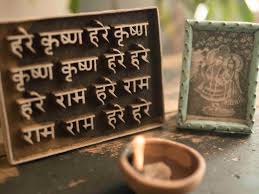
When he met Śrī Yashoda Mā (Lilāmayī Devī), a disciple of Śrī Rāmakṛṣṇa Paramahaṁsa, his spiritual destiny unfolded. She initiated him into the chanting of the holy name of Kṛṣṇa, and at that moment, his life changed forever.
She gave him the name Kṛṣṇaprema, meaning “the love of Kṛṣṇa.”
The Awakening of Bhakti
His devotion quickly deepened beyond measure.
He left his university position, renounced worldly attachments, and settled in Mirtola, a serene village near Almora in the Himalayan foothills. There, under the guidance of his guru, he lived a life of meditation, chanting, and service.
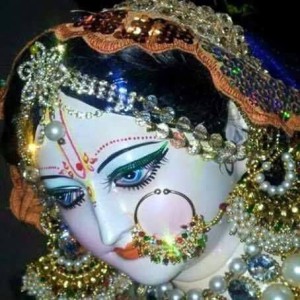
Kṛṣṇaprema worshiped Śrī Gopāla, the deity of child Kṛṣṇa, with extraordinary affection. For him, Gopāla was not a statue but a living child. He served the Lord with the tenderness of a parent—bathing, dressing, feeding, and speaking to Him as one would to a beloved son.
The Divine Relationship
One day, during kīrtana in his āśrama, he became overwhelmed by love. His eyes filled with tears, his voice trembled, and he cried aloud, “Gopāla! Gopāla! Where are You?”
Suddenly, the small brass deity of Gopāla began to radiate brilliant light. The entire room filled with an effulgence brighter than a thousand lamps. The other devotees present fell silent, their hearts pounding as the air vibrated with sacred energy.
Later, Kṛṣṇaprema described the experience in a quiet, reverent voice:
“He came… He came as a living child. His smile was more beautiful than all creation, His eyes full of sweetness and mischief. He touched my cheek, and then vanished into pure light.”
The Revelation
From that moment onward, Kṛṣṇaprema no longer referred to Kṛṣṇa as a distant God.
He would say, “My Gopāla is everywhere—He has made my heart His playground.”
Even in his later years, when his health declined, his face radiated divine joy. Often while walking through the Himalayan forest, he would suddenly pause and whisper, “Listen—He is playing His flute.”
The disciples around him could hear only the wind, yet their hearts filled with bliss.
He lived continually in the presence of his Lord.
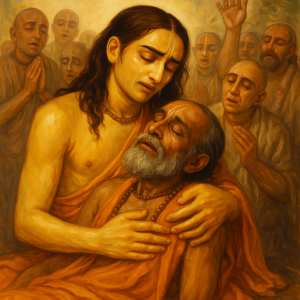
When his time came to leave this world, his last words were, “Gopāla, come!”—and those present saw a faint golden glow on his face, like the smile of a child.
Reflection
Śrī Kṛṣṇaprema’s life proves that bhakti knows no boundaries of nationality or birth. The law of reciprocation operates universally: the Lord reveals Himself according to the depth of the devotee’s surrender.
As Kṛṣṇa says in the Bhagavad-gītā (4.11):
“As all surrender unto Me, I reward them accordingly.”
When love becomes pure, God ceases to be theory—He becomes visible, audible, and tangible.
Kṛṣṇaprema’s simple cry, “Gopāla! Come!” turned philosophy into revelation, and knowledge into divine play.
Source
Source: “Experiences in Bhakti: The Science Celestial,” by O. B. L. Kapoor — Chapter Six: Verification of the Law of Reciprocation (place: Mirtola, Almora, Himalayas).