Ascetic Life at Govinda-kuṇḍa
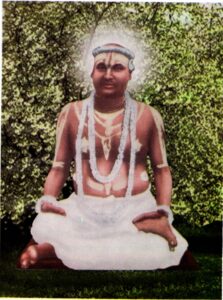
Śrī Haridāsa Bābājī Mahārāja lived at Govinda-kuṇḍa, near the sacred hill of Govardhana. He performed strict solitary bhajana, living with extraordinary simplicity. He had no hut, no fixed residence—simply a small space where he sat absorbed in chanting, surrounded by the natural beauty of Girirāja Govardhana.
He accepted madhukarī only from two houses. Every other form of charity he respectfully rejected. If he received more than he needed, he would give it away immediately, keeping only the minimum amount required to maintain the body.
A Life of Solitude and Silence
Bābājī Mahārāja spent most of his day in deep meditation and nāma-bhajana. He rarely spoke with anyone. When absolutely necessary, he communicated in short, humble sentences.
He avoided company, noise, and worldly conversation. His nature was inward, contemplative, and soaked in bhakti. People who approached him felt as if they were standing in the presence of a sage from another world.
Unwavering Devotion to Nāma
He chanted continuously, absorbed completely in the holy names of Rādhā and Kṛṣṇa. His voice was soft and his chanting constant. He ate very little, slept very little, and spoke even less.
His entire life was a practical commentary on the verse:
kīrtanīyaḥ sadā hariḥ — “One should chant the Holy Name constantly.”
(Śikṣāṣṭaka 3)
His Protective Nature Toward Bhajana
Although he avoided society, he was extremely protective of sincere sādhakas. If anyone disturbed a devotee engaged in bhajana, he became stern and outspoken.
On the other hand, if a simple villager approached with humility, he treated them like a child of Śrīmatī Rādhārāṇī.
He always taught that:
“Bhajana flourishes only where humility and simplicity dwell.”
A Saint Free From All Worldliness
Śrī Haridāsa Bābājī Mahārāja had completely uprooted worldly desires. He paid no attention to bodily comfort, honor, or recognition. If anyone praised him, he would immediately become upset and send them away.
He never touched money. If someone placed a coin in front of him, he would pick it up with a stick and throw it far away, saying:
“Money is poison—it destroys devotion.”
His Final Days
In the final days of his earthly pastimes, he became even more withdrawn. His chanting increased, and his outward awareness decreased. He spoke almost nothing, ate almost nothing, and slept hardly at all.
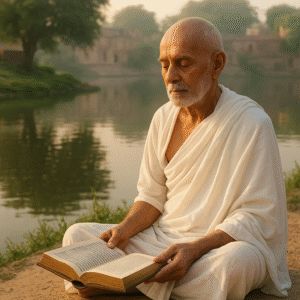
One morning, devotees found him sitting in deep meditation facing Govardhana Hill. His beads rested in his hand. His breathing had stopped, but his face was peaceful and radiant.
He had entered eternal Vraja-līlā, returning to the shelter of Śrī Girirāja.
His samādhi was placed at Govinda-kuṇḍa, where pilgrims even today feel a deep stillness and spiritual presence.
Reflection
Śrī Haridāsa Bābājī Mahārāja teaches us the meaning of:
silence, simplicity, constant chanting, and deep inner life.
He shows that true devotion is not external show, not many disciples, not fame, not comfort—but:
- genuine humility
- complete dependence on the Holy Name
- avoiding worldly distractions
- unwavering focus on Kṛṣṇa
- life lived for service, not society
His life is a shining example of what it means to live solely for bhajana, solely for the pleasure of Śrī Śrī Rādhā-Kṛṣṇa.
He reminds us:
Solitude becomes sacred when the Holy Name fills the heart.
Prayer
O Śrī Haridāsa Bābājī Mahārāja,
Silent saint of Govardhana,
Master of chanting,
Lover of the Holy Name—
Teach us to live simply,
To speak less and remember more,
To let the Holy Name become our breath,
And to seek only the shelter of Śrī Girirāja Govardhana.
May your example awaken purity in our hearts
And lead us toward the sweetness of eternal bhajana.
Source: Gauḍīya Vaiṣṇava Jīvana