The Devotee’s Background
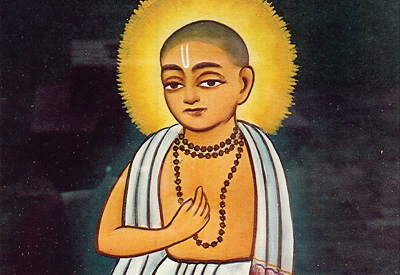
After receiving the blessings of Śrī Nityānanda Prabhu at the Festival of Chipped Rice in Pānīhāṭi, Śrī Raghunātha Dāsa Gosvāmī became completely detached from worldly life.
Though born into great wealth, with guards and servants surrounding him, his heart now burned with only one desire—to attain the lotus feet of Śrī Caitanya Mahāprabhu in Jagannātha Purī.
By the Lord’s mercy, he soon escaped from home without being noticed. He walked continuously, living only on milk, until he reached Purī after twelve days. There, exhausted but radiant with joy, he fell before Mahāprabhu’s lotus feet.
The Lord’s Embrace
When Mahāprabhu saw him, He lifted him gently and embraced him with tears in His eyes. “You have come at last, Raghunātha,” He said. “Nityānanda has delivered you into My hands.”
Raghunātha could not speak. His throat choked with emotion, his eyes overflowed with tears, and he simply wept, holding the Lord’s feet.
Mahāprabhu then entrusted him to the care of Svarūpa Dāmodara Gosvāmī, saying, “From today, he will be known as Svarūpera Raghunātha.”
Under Svarūpa Dāmodara’s guidance, Raghunātha began a life of complete renunciation and devotion.
The Life of Renunciation
At first, he accepted only a small portion of the Jagannātha temple’s daily offerings. Later, finding even that too luxurious, he began begging outside the temple gates, accepting only a handful of rice that others had thrown away.
When devotees asked why he was so strict, he replied softly, “I wish to live by remembering Kṛṣṇa’s mercy, not by demanding comfort.”
Yet, though he appeared emaciated, his face shone with joy. His only wealth was the holy name, and his only ambition was service. He spent his days chanting and hearing from Svarūpa Dāmodara and Mahāprabhu, and his nights crying in remembrance of Kṛṣṇa.
The Lord’s Personal Care
Once, seeing his austerity, Mahāprabhu brought some Jagannātha prasāda with His own hands and placed it in Raghunātha’s palm, saying, “Eat this, My dear one. It is the mercy of the Lord.”
Overwhelmed, Raghunātha protested, “I am not worthy to receive food from Your own hand.”
But Mahāprabhu smiled and said, “This is not food—it is Kṛṣṇa’s love.”
When Raghunātha ate, his body trembled, tears flowed, and he fell into trance. The devotees around him saw the glory of a soul completely absorbed in divine love.
The Lord’s Instruction
On another occasion, Mahāprabhu called him close and gave him three simple but eternal instructions:
- Do not speak gossip or criticism of others.
- Do not seek honor; instead, offer respect to all.
- Always chant the holy name of Kṛṣṇa and serve Him with your heart.
He concluded,
“You are now free from worldly duties. Spend every moment chanting and remembering Kṛṣṇa. In this lies perfection.”
The Devotee’s Transformation
Raghunātha followed these teachings perfectly.
After Mahāprabhu’s disappearance, he moved to Rādhā-kuṇḍa in Vṛndāvana, where he lived a life of deep meditation and service. There he wrote and spoke about the Lord’s pastimes with such sweetness that even scholars were humbled to silence.
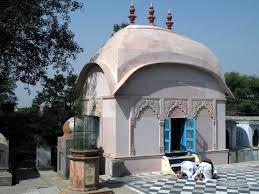
His hut near Rādhā-kuṇḍa became a holy place. The ground where he sat absorbed in chanting is still visited by pilgrims who seek his mercy and the spirit of detachment joined with love.
Reflection
Śrī Raghunātha Dāsa Gosvāmī’s life demonstrates that real renunciation is not rejection but absorption. He did not abandon the world in disgust but transcended it through love.
Mahāprabhu’s three instructions to him form the foundation of spiritual life for every devotee:
- Speak only what nourishes devotion.
- Seek no honor for oneself.
- Chant constantly and serve with humility.
When these three are practiced sincerely, one’s life—whether in a temple, a home, or a forest—becomes Goloka itself.
Source
Source: “Experiences in Bhakti: The Science Celestial,” by O. B. L. Kapoor — Chapter Six: Verification of the Law of Reciprocation (place: Jagannātha Purī and Rādhā-kuṇḍa, Vṛndāvana).